
Recent Hail Storm in North Texas
Commercial
Roof Coatings in Texas
An aging commercial roof does not always need to be torn off and replaced immediately. When the existing roofing system remains structurally sound, a professionally installed roof coating may provide an effective way to reinforce vulnerable surfaces, improve weather protection, and extend the roof’s useful service life.
Martin Pitts Construction provides commercial roof coating services for businesses, facility managers, and property owners throughout Texas, including the Dallas-Fort Worth area. We begin with a detailed inspection to determine whether coating the roof is a practical option or whether repairs, drainage improvements, or full roof replacement would provide a better long-term result.
What Are Commercial Roof Coatings?
Commercial roof coatings are fluid-applied materials installed over certain existing roofing systems. Once cured, the coating creates a continuous protective surface across much of the roof, helping shield the underlying materials from sunlight, rain, wind-driven debris, and normal weather exposure.
Unlike a full roof replacement, a coating system typically works with the roof that is already in place. The existing roof must still be in suitable condition, and damaged areas generally need to be repaired before the coating can be applied.
When Does a Commercial Roof Coating Make Sense?
A roof coating may make sense when a commercial roof is showing signs of age but has not reached the point where complete replacement is necessary. The goal is not to conceal serious damage. It is to protect and reinforce a roof that still has a serviceable foundation.
A coating may also be considered when the building owner wants to improve reflectivity or delay a disruptive replacement project. Each roof must be evaluated individually because age alone does not determine whether coating is appropriate.
Common Signs Your Roof May Be a Candidate
A commercial roof coating inspection may be appropriate when you notice:
-
An aging but structurally stable roofing system
-
Minor leaks or isolated moisture entry
-
Surface cracking or weathering
-
Worn seams, flashings, or transitions
-
Discoloration caused by prolonged UV exposure
-
Reduced reflectivity on an older roof surface
-
Minor ponding concerns after rainfall
-
Previous repairs that need additional protection
-
A roof approaching the later portion of its expected service life
-
A desire to delay replacement without ignoring maintenance needs
These conditions do not automatically mean a coating should be installed. Moisture trapped beneath the roof, widespread saturation, deteriorated insulation, poor drainage, or extensive structural damage may make repair or replacement the more responsible recommendation.
Why Texas Commercial Roofs Need Additional Protection
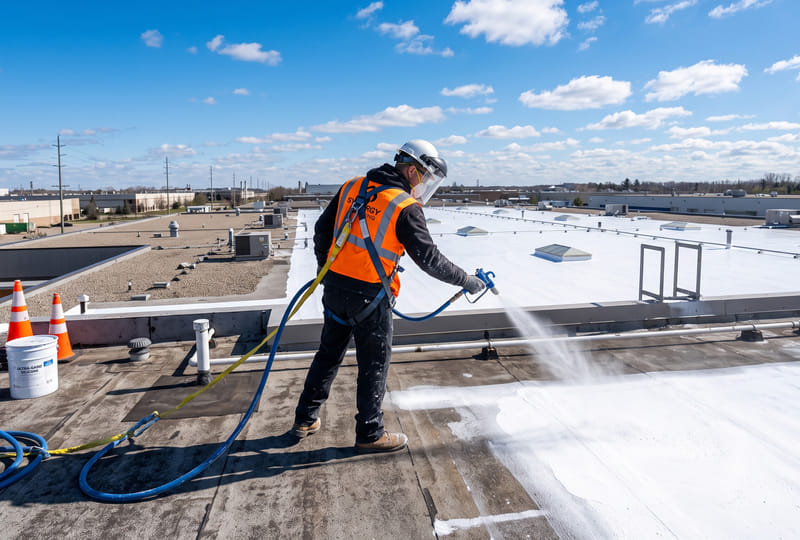
Texas commercial roofs face demanding conditions throughout the year. Prolonged heat, intense sunlight, severe thunderstorms, hail, high winds, and sudden temperature changes can gradually weaken roofing materials and expose vulnerable areas.
Commercial roof coatings provide another layer of defense between the existing roof and these conditions. Although a coating cannot prevent every type of storm damage, it can help reduce ordinary weather exposure and slow the deterioration of a suitable roofing system.
Benefits of Commercial Roof Coatings
One of the primary reasons property owners consider commercial roof coatings is to get more service from a roof that is aging but still functional. Protecting the existing surface may delay the need for full replacement when the roof remains a suitable candidate.
The amount of additional service life will depend on the roof’s current condition, the coating material, preparation quality, installation, drainage, maintenance, and future weather exposure. An inspection provides a more realistic understanding of what a coating can accomplish for a particular property.
Certain commercial roof coatings create a lighter, more reflective surface that absorbs less solar energy than a dark, weathered roof. This reflectivity can help reduce surface temperatures during periods of direct sunlight.
Building design, insulation, ventilation, interior use, and mechanical systems all affect indoor comfort and energy performance. A reflective coating should therefore be viewed as one part of the building’s overall roof and energy strategy rather than a universal solution.
A properly selected coating can help protect the underlying roofing material from UV exposure and everyday weathering. This added surface protection may slow cracking, drying, and other forms of gradual deterioration.
Coatings can also provide additional protection around properly prepared seams, fasteners, flashings, and roof penetrations. These areas often require repairs or reinforcement before the broader coating system is installed.
Because commercial roof coatings are fluid applied, they can form a relatively continuous surface across the roof once cured. This can reduce the number of exposed transitions where water may enter, provided the roof is correctly repaired and prepared beforehand.
A coating should not be treated as a shortcut for resolving active water intrusion. Existing leaks must be investigated so damaged materials, failed seams, wet insulation, or drainage problems can be addressed before installation.
Full commercial roof replacement can affect building access, operations, tenants, customers, and project scheduling. When coating is technically appropriate, it may allow a property owner to postpone a more extensive replacement project while continuing to protect the building.
Delaying replacement is valuable only when it is done responsibly. Applying a coating to a badly deteriorated roof can waste money and leave serious problems unresolved, which is why Martin Pitts evaluates the roof before recommending a system.
Commercial Roof Coatings for Flat and Low-Slope Roofs
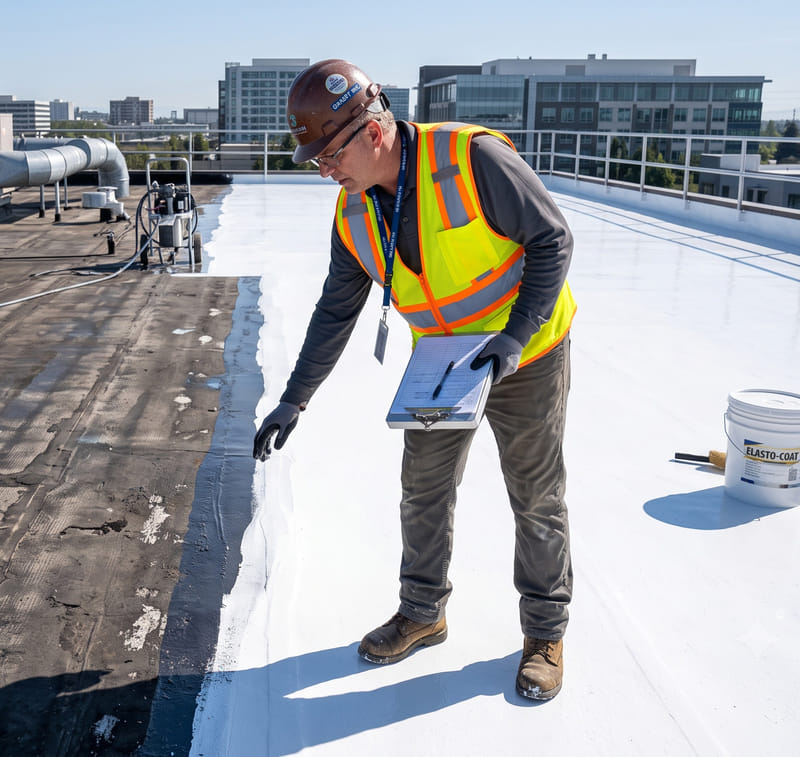
Flat and low-slope commercial roofs require careful attention because water does not leave the surface as quickly as it does on a steep-slope roof. Drainage patterns, scuppers, internal drains, gutters, rooftop equipment, and penetrations must all be considered before a coating project begins.
Coatings may be compatible with several types of commercial roofing systems, depending on their condition and the manufacturer’s requirements. Compatibility testing, cleaning, repairs, primer selection, and application thickness can all influence the final performance of the system.
Can a Roof Coating Fix Ponding Water?
A commercial roof coating may provide additional protection in areas exposed to water, but it does not correct the underlying cause of poor drainage. Ponding water may result from low spots, compressed insulation, blocked drains, inadequate slope, structural movement, or improperly designed drainage components.
Before coating a roof with ponding concerns, Martin Pitts evaluates where water collects, how long it remains, and whether repairs or drainage improvements are needed. Some coating materials tolerate standing water better than others, but product selection alone cannot solve a significant drainage defect.
Addressing the cause of ponding water helps protect the roof, reduce unnecessary stress, and improve the likelihood that the coating system will perform as intended.
Will a Commercial Roof Coating Stop Leaks?
A coating system can help support waterproofing, but the source of an active leak should be found before the coating is applied. Water may enter through failed flashing, open seams, damaged membranes, rooftop equipment, wall transitions, drains, or areas that appear far from the interior leak.
Proper preparation may include repairing punctures, replacing damaged sections, reinforcing seams, sealing penetrations, and correcting flashing problems. Applying a coating without completing these steps may temporarily cover visible damage while allowing moisture to remain trapped underneath.
A roof coating works best as part of a complete restoration process rather than as a surface-level response to unexplained leaks.
Our Inspection-First Approach
1) Evaluate the Existing Roof System: We identify the roofing material and examine its overall age, condition, and visible level of deterioration.
2) Inspect Seams, Flashings, and Penetrations: Our team checks seams, fasteners, flashing, drains, rooftop equipment, and other areas where leaks and surface failures commonly develop.
3) Review Drainage and Ponding Concern: We evaluate how water moves across the roof and identify low areas, blocked drainage components, or recurring ponding that may need to be corrected.
4) Look for Moisture and Structural Damage: Signs of trapped moisture, saturated insulation, deteriorated decking, or widespread membrane failure may indicate that a coating is not the right solution.
5) Determine the Necessary Repairs: Before a coating can be applied, damaged sections, open seams, punctures, flashing problems, and other defects may need to be repaired.
6) Recommend the Most Appropriate Solution: Depending on what the inspection reveals, we may recommend targeted repairs, drainage improvements, a commercial roof coating, continued monitoring, or full roof replacement.
7) Explain the Findings Clearly: We review the roof’s condition, discuss the available options, and help business owners and facility managers understand the practical and financial considerations behind each recommendation.
This inspection-first approach helps ensure that a roof coating is recommended only when it can provide meaningful protection and long-term value.
Preparing a Commercial Roof for Coating
Surface preparation is one of the most important parts of a commercial roof coating project. A coating cannot perform properly when it is installed over dirt, loose materials, active moisture, deteriorated roofing, or untreated damage.
Preparation may include cleaning the roof, removing debris, repairing damaged sections, reinforcing seams, sealing penetrations, addressing flashing problems, and applying a compatible primer. The exact process depends on the existing roofing material and the selected coating system.
Weather conditions must also be considered. Temperature, humidity, surface moisture, and the possibility of rain can affect application and curing, making professional scheduling especially important in Texas.
Types of Commercial Roof Coatings
Different coating materials are available for different roofing systems, property conditions, and performance goals. Common options may include acrylic, silicone, polyurethane, and other fluid-applied systems.
Acrylic coatings are often selected for their reflectivity and UV resistance, while silicone systems may be considered for roofs that experience frequent moisture exposure. Polyurethane coatings can provide added durability in certain high-wear applications.
No coating type is automatically best for every building. Martin Pitts considers the existing roof, drainage, climate exposure, rooftop traffic, budget, and long-term plans for the property before recommending a material.
Roof Coating vs. Roof Replacement
Roof coatings and roof replacements address different levels of deterioration. A coating protects and reinforces a serviceable roof, while replacement removes and rebuilds a roofing system that has become too damaged or unreliable to restore effectively.
A coating may be appropriate when deterioration is mainly limited to the surface and repairable details. Replacement may be necessary when damage is widespread, moisture is trapped throughout the system, insulation has deteriorated, decking is compromised, or previous failures have become too extensive.
The least expensive initial option is not always the most economical long-term decision. A professional inspection can help determine whether coating the roof will provide meaningful value or merely postpone an unavoidable replacement for a short period.
Commercial Roof Coatings for DFW Properties
Commercial buildings throughout Dallas-Fort Worth are exposed to intense summer heat, strong sunlight, wind, hail, and sudden storms. Warehouses, offices, retail buildings, industrial facilities, multifamily properties, and other commercial structures can all experience accelerated roof wear under these conditions.
Facility managers often need roofing solutions that balance performance, budget planning, tenant needs, and operational continuity. A roof coating may provide a practical restoration option when a full replacement is not yet necessary.
Martin Pitts works with Texas property owners and managers to evaluate current roof conditions, identify vulnerable areas, and develop a plan that supports the building’s immediate and long-term needs.
Who Can Benefit From a Commercial Roof Coating Inspection?
Commercial roof coating evaluations can be useful for:
-
Business owners
-
Commercial Property Owners
-
Facility Managers
-
Property Management Companies
-
Warehouse Operators
-
Retail Center Managers
-
Industrial Property Managers
-
Office Building Owners
-
Multifamily Property Managers
-
Churches, schools, and nonprofit organizations
An inspection can be especially valuable when planning annual maintenance, preparing a capital improvement budget, responding to recurring leaks, or deciding whether replacement can reasonably be postponed.

Commercial Roofing
Serving North Texas and the DFW Area
Martin Pitts Construction provides a wide range of commercial roofing services throughout North Texas, including Dallas, Fort Worth, and nearby communities. Learn more about our services in DFW:
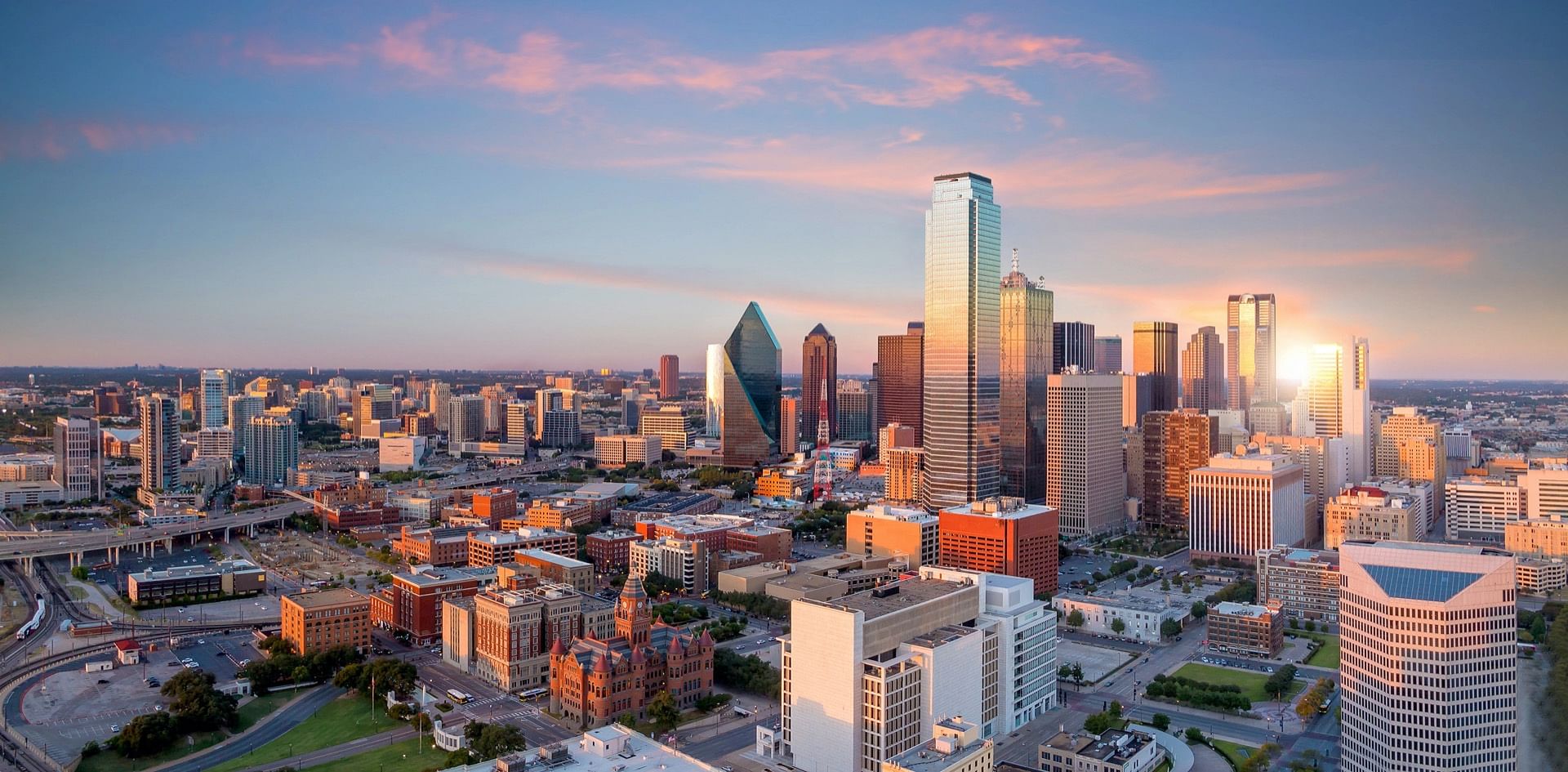
In a fast-moving city like Dallas, your commercial property needs a roof that performs as hard as your business does. We deliver expert roofing solutions built to withstand the demands of North Texas weather.
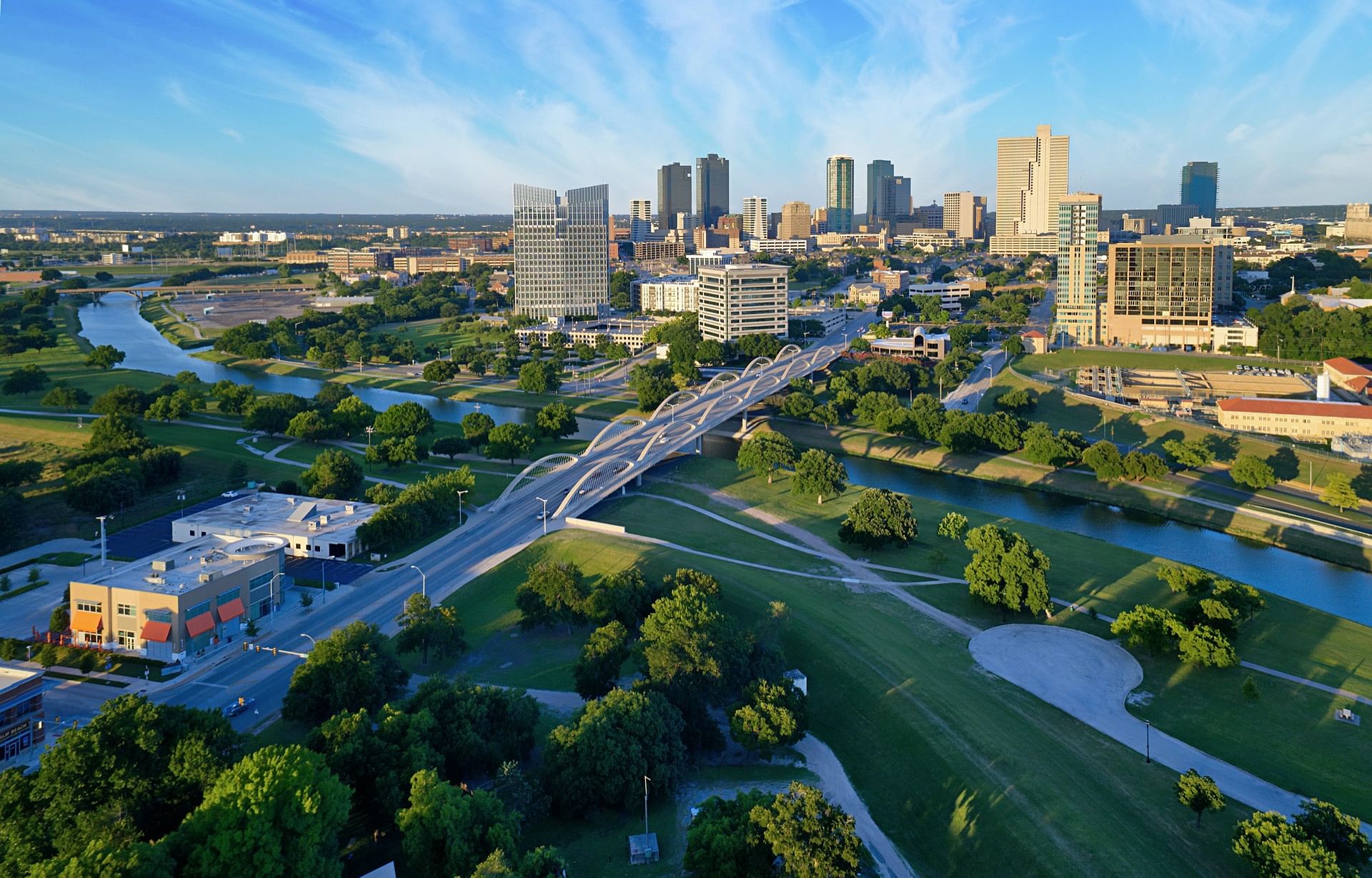
From the Stockyards to Sundance Square, Fort Worth businesses rely on strong, dependable roofing. Our team brings decades of experience to every project, ensuring long-lasting results with minimal disruption.
Protect Your Commercial Roof Before Minor Wear Becomes Major Damage
Roof deterioration often develops gradually. Small seam openings, weathered surfaces, aging flashing, and minor drainage problems can become more expensive when they remain unaddressed through multiple Texas storm seasons.
Commercial roof coatings in the Dallas-Fort Worth area can provide an effective layer of protection when the existing roof is still a good candidate. The key is determining whether the roof can be restored successfully before selecting a product or setting a project schedule.
Martin Pitts Construction will inspect your commercial roof, explain its current condition, and recommend coating only when it offers a practical path forward.












Get in touch with us today:
Call us at 817-750-2900

Martin Pitts
Roofing & Construction
Serving the Keller / Fort Worth Area
5613 Bowie St.
Watauga, TX 76148
Areas Served
© 2026 All Rights Reserved | Privacy Policy | Martin Pitts Construction